People
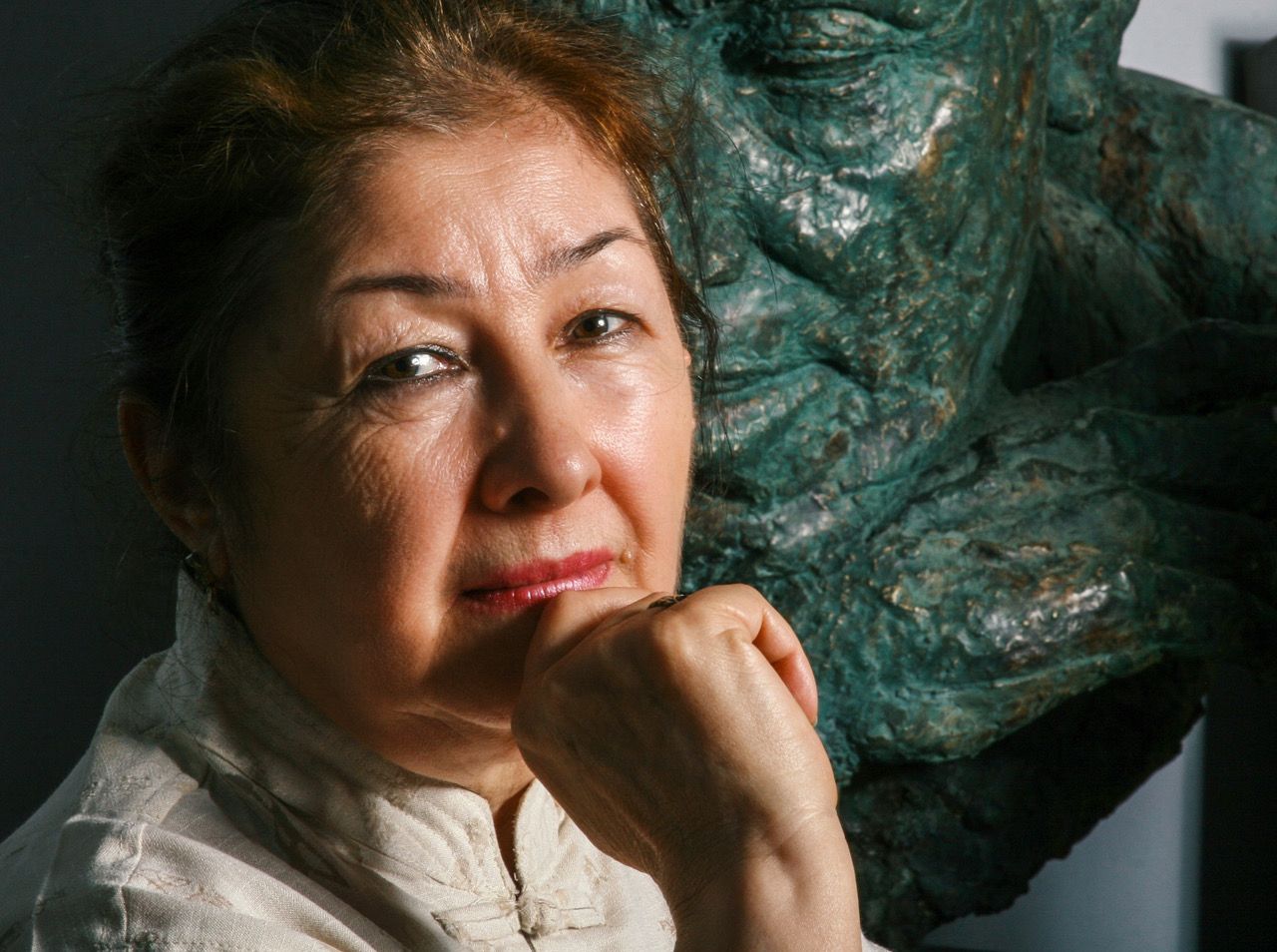
Munira Shahidi
1943–2026
Scholar, cultural bridge-builder, founder and guardian of memory
Munira Shahidi was a Tajik scholar of comparative literature whose life was devoted to the dialogue between East and West. Through scholarship, cultural diplomacy, publishing and the preservation of musical heritage, she sought to show that civilizations do not develop in isolation. They develop through centuries of encounter, translation and exchange.
She co-created the Ziyodullo Shahidi Museum of Musical Culture with her mother, Marhabokhon Shahidi, and founded the Ziyodullo Shahidi International Foundation in 1992. Her work connected the intellectual traditions of Central Asia with Europe, South Asia and the wider world.
One who brings light
Munira Shahidi was born on 22 March 1943 in Dushanbe, then known as Stalinabad, into one of Tajikistan's remarkable musical and intellectual families. She was the eldest daughter of the composer Ziyodullo Shahidi and Marhabokhon Shahidi. The Persian poet Abulqasim Lahuti, a close friend of her father, gave her the name Munira, meaning “one who brings light”. The family narrative in Echoes of Chiaroscuro makes the meaning of this name central to the story of her life.
Her education began, in a sense, long before university. The Shahidi home was filled with music, poetry and conversation. Her father composed at the piano beside a garden of cherry trees, quince and grapevines; her mother sang while baking bread and keeping the rhythms of family life. Poets, composers and singers came to the house, and literature, philosophy, art and society were discussed around the family table. Echoes of Chiaroscuro describes a home in which music flowed through ordinary life.
From the family archive · Echoes of Chiaroscuro
Scholarship
Munira studied English in Dushanbe and completed university in 1964. She continued her studies in Moscow at the Institute of Oriental Studies, where her research focused on comparative literature and on British interpretations of Persian literary culture, particularly E. G. Browne's monumental A Literary History of Persia. Her later academic career remained rooted in the same question: how does one culture understand another, and what is lost or discovered when ideas move between languages?
Her intellectual interests crossed historical and geographical boundaries. She studied Muhammad Iqbal, Mirza Abdul Qadir Bedil, Jalal al-Din Rumi, Ibn Sina and Dante Alighieri, among others. Rather than treating East and West as self-contained civilizations, she looked for routes of intellectual transmission: translation, philosophy, poetry, migration, scholarship and artistic exchange.
One of her most important works was Ibn Sina and Dante, published in Dushanbe in 1986. The study examined intellectual and humanistic connections between the Persian-Islamic philosophical tradition represented by Ibn Sina, known in Europe as Avicenna, and the world of Dante. The book received scholarly attention outside Tajikistan, including a review in the Deutsches Dante-Jahrbuch.
Her scholarship extended beyond books. She published many articles internationally and developed a larger vision of Eurasian cultural history, arguing that Central Asia should be understood as a historic meeting place of ideas, languages and artistic traditions rather than an isolated periphery. Her 2016 article, “The Impact of the Emergence of Eurasian Art Communities in the Globalizing World”, connected art, education, international relations and cultural diplomacy.
The museum and the Foundation
Munira's work also took institutional form. After Ziyodullo Shahidi's death in 1985, she and her mother decided that his home should remain a living place of memory. The house opened as the Ziyodullo Shahidi Museum of Musical Culture in 1987 and became the Republican Museum of Musical Culture in 1989. It preserved scores, manuscripts, recordings, personal papers and instruments associated with Shahidi and with the wider musical culture of Tajikistan.
For Munira the museum was more than a memorial: preservation had meaning only when the past continued to speak to the present. Echoes of Chiaroscuro presents the family's musical manuscripts in the same spirit, as carriers of memory, culture and human presence.
In February 1992, during the first year of Tajikistan's civil war, Munira founded the Ziyodullo Shahidi International Foundation. Its mission placed culture, education, music and dialogue at the centre of peace-building. The Foundation later created the international journal Fonus, published in Tajik, Russian and English. Munira edited it from 2001 to 2017.
East and West
Her international career brought her to universities, conferences and research institutions across Europe, Asia and North America. She held fellowships with the Swedish Institute and the Maison des Sciences de l'Homme in Paris, was associated with Cambridge, lectured at institutions including Cambridge and McGill, and took part in major international research projects. From 2017 to 2022 she led the Tajik side of the GCRF-COMPASS research programme.
In her later years she returned to the theme that had accompanied her throughout her life: cultural diplomacy as an alternative to isolation. Her final major book, East-West Dialogues in the 21st Century: Poetics of Cultural Diplomacy, was presented at Cambridge and other international venues. Cambridge's Central Asia Forum records its 2024 launch, held in collaboration with Gillian Tett.
Farewell
Munira Shahidi died in Moscow on 15 July 2026, aged eighty-three. Her farewell took place in Dushanbe, in the house that had become the museum she had helped create nearly four decades earlier.
Her legacy lies in the institutions she founded and the books she wrote, and in an understanding of culture: that memory must remain alive, that difference need not prevent dialogue, and that the intellectual heritage of Central Asia belongs within the larger history of world civilization.
Source: Shahidi Foundation Archive / published scholarship
Munira Shahidi
Books and scholarship
Ibn Sina and Dante
Munira Shahidi examines the intellectual relationship between the Persian-Islamic tradition represented by Ibn Sina, or Avicenna, and the European literary culture represented by Dante. Her broader argument places medieval Europe within a network of intellectual transmission involving Arabic, Persian, Jewish, Christian and Mediterranean cultures. The book was reviewed in the Deutsches Dante-Jahrbuch.
Muhammad Iqbal
Munira Shahidi translated Syed Abdul Vahid's study of Muhammad Iqbal into Russian and annotated it. The translation brought the intellectual world of Iqbal and Lahore to Russian-speaking readers in Central Asia and the Soviet Union.
Rumi's ghazals
Munira Shahidi was associated with a two-volume edition of the ghazals of Jalal al-Din Rumi, or Balkhi, published in Dushanbe. For her, Rumi represented the movement of spiritual and poetic ideas across linguistic and political boundaries.
The Idea of Peacebuilding in Tajik-Persian Literature
The book belongs to her work on culture, peace and development.
The Impact of the Emergence of Eurasian Art Communities in the Globalizing World
The article sets out her mature intellectual project: connecting Central Asian cultural history with international relations, education and cultural diplomacy.
East-West Dialogues in the 21st Century: Poetics of Cultural Diplomacy
Her final major book. It came about after two Iranian publishers visited the museum and offered to publish a work of her choosing. Cambridge's Central Asia Forum records its 2024 launch, held in collaboration with Gillian Tett.
Source: Shahidi Foundation Archive / published scholarship
Echoes of Chiaroscuro: Unspoken Stories of Light
Her daughters tell Munira Shahidi's story in this book, which is dedicated to her as a scholar of East–West comparative literature and founder of the Ziyodullo Shahidi Museum. Its foreword describes her life as a human embodiment of the Silk Road, connecting intellectual, musical and cultural traditions across countries and generations.
From the family archive · Echoes of Chiaroscuro