Stories

Stories from the Shahidi House

These stories come from the family and the museum. They introduce Ziyodullo and Munira Shahidi as people as well as through their work.

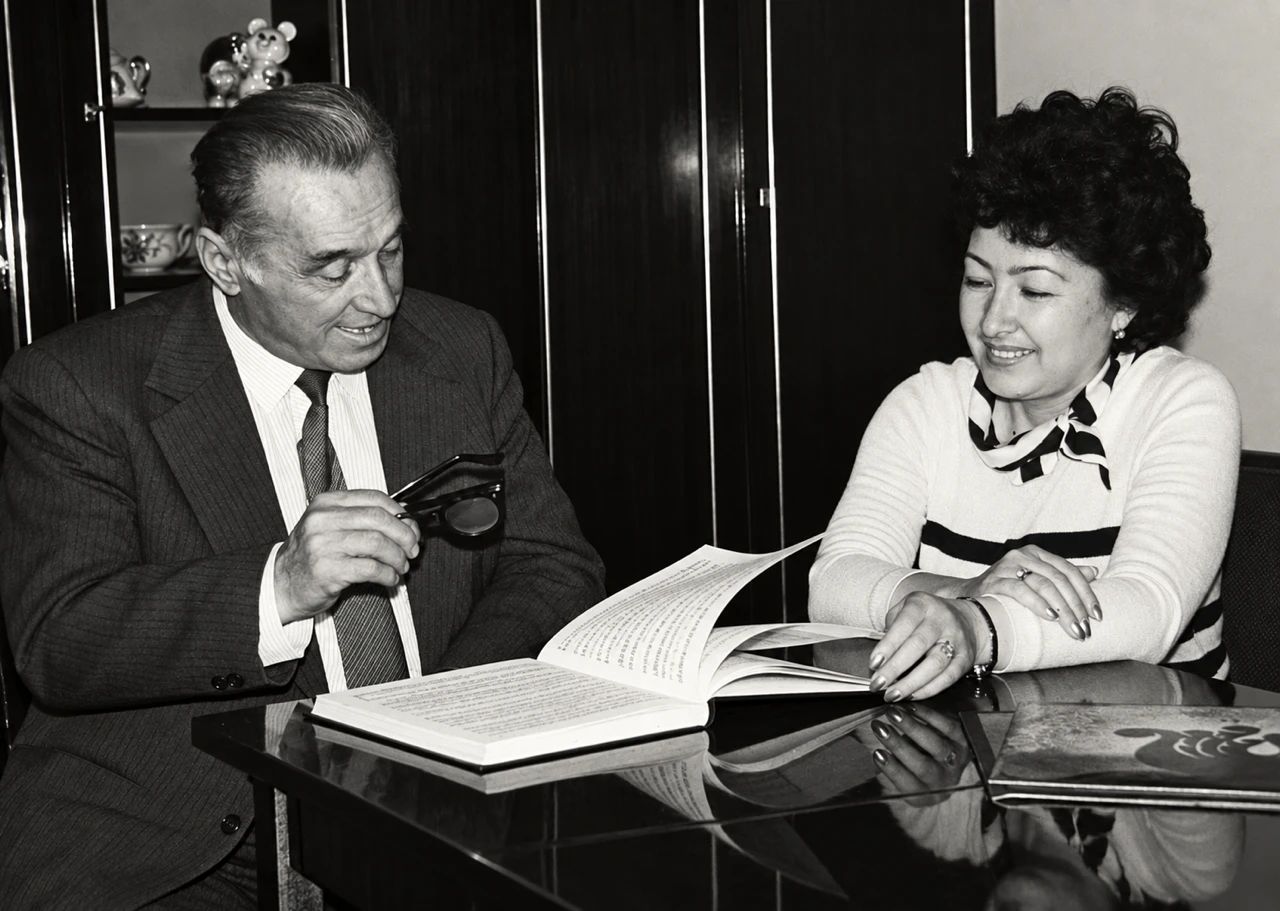
Black-and-white photograph of Ziyodullo Shahidi, holding his glasses, and Munira Shahidi, smiling, at a polished table with a large open book between them.
Ziyodullo and Munira Shahidi with an open book.
  1. The poet who gave Munira her name

    Munira Shahidi was born in wartime Stalinabad in 1943. The poet Abulqasim Lahuti, a friend of Ziyodullo Shahidi, proposed her name. Munira means “one who brings light”.

    From the family archive · Echoes of Chiaroscuro

  2. A house filled with music

    Ziyodullo Shahidi composed at a piano beside the garden window, among cherry trees and grapevines. Marhabokhon Shahidi sang while she baked non. Artists gathered around the tea table. In this family, culture was lived every day; it did not wait for the concert hall.

    From the family archive · Echoes of Chiaroscuro

  3. Shahnameh by lamplight

    One evening Ziyodullo read the story of Rustam and Sohrab from Ferdowsi's Shahnameh, using his hands to cast shadow figures on the wall. When Munira wanted the story to go on, he told her that a good story, like music, must unfold slowly.

    From the family archive · Echoes of Chiaroscuro

  4. Munira listening at the door

    As a child, Munira sometimes woke while her father was working late and listened to the piano from outside his study. Once she asked him what he was playing. He told her it was a song about the sufferings and joys of their people. The family connects that moment with Qishloqi Shumo.

    From the family archive · Echoes of Chiaroscuro

  5. From family home to museum

    After Ziyodullo Shahidi's death in 1985, Marhabokhon and Munira Shahidi chose to open his house to the public. In 1987 it became a museum, preserving his manuscripts, scores, recordings and instruments and turning private memory into public cultural heritage.

    Source: Shahidi Foundation Archive / published scholarship

  6. The missing Central Asian story

    During research in Britain in the 1990s, Munira searched for a comprehensive account of Central Asian music and felt the absence of the region from international knowledge. That void helped shape her later work in Eurasian studies, cultural diplomacy and international dialogue.

    From the family archive · Echoes of Chiaroscuro

  7. A book born in the museum

    Two Iranian publishers visited the museum and offered to publish a work of Munira's choosing. Her later book on dialogue between East and West grew from that visit, joining the museum, scholarship and international exchange.

    From the family archive · Echoes of Chiaroscuro

Continue reading

Read the full biographies of Ziyodullo and Munira Shahidi.