People
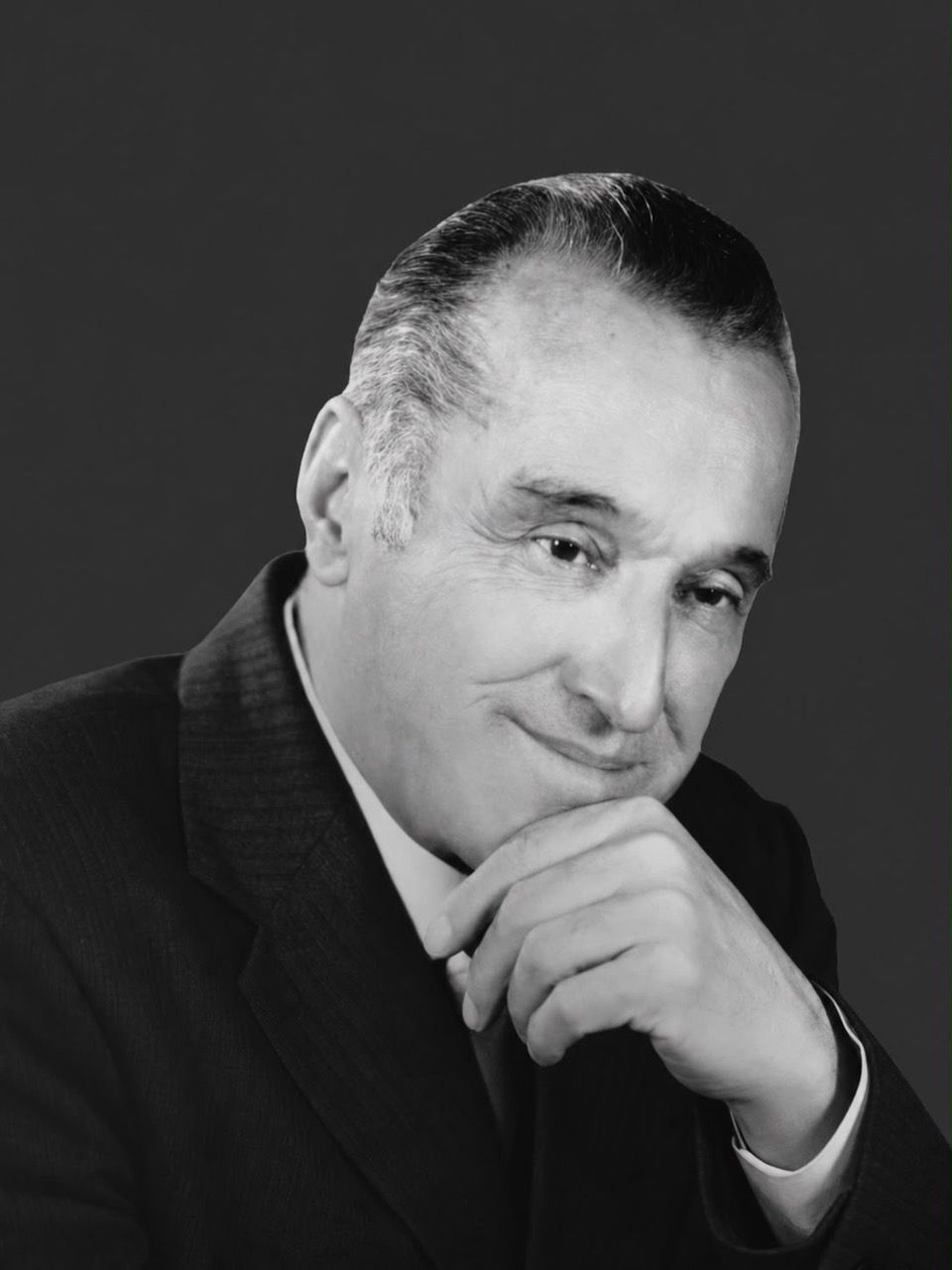
Ziyodullo Shahidi
1914–1985
Composer, innovator and architect of modern Tajik symphonic music
Ziyodullo Shahidi was one of the formative figures of twentieth-century Tajik music. Born into the musical culture of Samarkand, he spent his creative life exploring how classical maqam traditions could enter into conversation with European symphonic thought. His operas, orchestral works, romances and hundreds of songs created a musical language in which heritage and modernity could coexist.
Samarkand
Ziyodullo Shahidi was born on 4 May 1914 in Samarkand, then part of the Russian Empire. His childhood unfolded within a Persian-speaking intellectual and musical environment. His father, Muqaddaskhon Shahidi, was himself a musician, associated with the performance of Shashmaqom, and the family home belonged to the wider cultural world of poetry, music and the reformist intellectual currents of early twentieth-century Central Asia.
That world was deeply disrupted by Soviet repression. Muqaddaskhon Shahidi was killed in 1937. Sources differ on the exact circumstances, but the fact of his death during the terror is well established. This experience formed part of the historical background against which Ziyodullo's artistic life unfolded.
Becoming a composer
Ziyodullo's path into professional composition was unusual. He worked first as a teacher and musician. Until 1939 he performed and worked in theatres and radio studios in Tashkent, Samarkand and Stalinabad, later Dushanbe. From 1939 to 1952 he directed the song-and-dance ensemble of the Tajik State Philharmonic. Before becoming known as a composer, he was also recognized as a performer of traditional instruments and particularly the gidjak.
He began formal composition study relatively late. From 1943 he studied in the studio of the Union of Composers with Alexander Lensky and Sergei Balasanyan. In 1946, at the age of thirty-two, he entered the Moscow Conservatory. He later studied composition with Vladimir Fere and graduated in 1957, aged forty-three.
Maqam and symphony
This encounter with European composition did not erase his Central Asian musical inheritance. On the contrary, the central project of his mature career became the problem of how maqam and symphony might coexist.
The tension was not simple. Shahidi initially argued strongly for European notation and polyphony and took part in public debates about the future of Tajik music. Yet his thinking developed. By the later 1960s and 1970s, he returned with new intensity to the maqam traditions from which he had emerged, now approaching them through the techniques of the symphonic orchestra.
His output was extensive. The Foundation's catalogue records two major operas, a symphony, several symphonic suites and poems, a string quartet, an oratorio, cantatas, theatre and film music, more than three hundred songs and fourteen romances.
His songs became especially familiar to the public. Works such as Vatan, Sitorai Man, Khonai Mo, Muhabbat, Qishloqi Shumo and Zi Suzi Sina circulated through radio and concert performance and were sung by major singers of the region. The Foundation notes that his songs were heard in Tajikistan and also across Uzbekistan, Iran, Afghanistan and other parts of Central Asia.
Komde & Madan and the Symphony of Maqams
One of his defining stage works was Komde & Madan, based on the poetry of the seventeenth-century Persian-language poet Mirza Abdul Qadir Bedil. Completed around 1959 and staged in Dushanbe around 1960, the opera brought Persian literary heritage into modern musical theatre. Sources differ by a year on the premiere. Its full score was published in Moscow in 1982, and the work was recorded for Moscow radio under the conductor Gennady Rozhdestvensky.
The culmination of Shahidi's search was the Symphony of Maqams of 1977. It drew on material from Shashmaqom, including Nasri Ushshoq and Bebokcha, while using modern orchestral techniques. Rather than harmonizing traditional melody in a Western manner, the music allows two systems to keep their individuality within the same work. The Foundation describes the symphony as moving from meditation through expectation and a “Hymn of Love”, before returning to its opening thought with a new sense of wisdom. It was performed at the Sixth Congress of the USSR Union of Composers and at the 1983 international maqam symposium in Samarkand.
Public life
Shahidi also held important positions in public musical life. He chaired the Union of Composers of the Tajik SSR from approximately 1956 to 1960 and directed the Dushanbe music college in the mid-1960s. He received the title People's Artist of the Tajik SSR in 1964 and the Rudaki State Prize in 1984.
He died in Dushanbe on 25 February 1985. Two years later, his wife Marhabokhon and daughter Munira opened his home as a museum. What had been a private house of composition, family life and conversation became a public institution dedicated to musical memory.
Source: Shahidi Foundation Archive / published scholarship
Ziyodullo Shahidi
Music
Symphony of Maqams
The central work of Ziyodullo Shahidi's career. It brings the language of the classical maqam into a modern symphonic framework without erasing its identity. Its principal materials include Nasri Ushshoq and Bebokcha from Shashmaqom.
Komde & Madan
An opera on the poetry of Mirza Abdul Qadir Bedil. The story centres on Komde, a dancer, and Madan, a singer-poet, and connects Persian literature, India, Samarkand and modern musical theatre. The Foundation's catalogue dates the composition to around 1959 and the production to around 1960; some Tajik sources give 1961. The full score appeared in Moscow in 1982.
Muhabbat
A song on words by Mirzo Tursunzoda. Batyr Zakirov sang it with a jazz orchestra, and it was performed again at the Shahidi Museum in 2026.
Zi Suzi Sina
A romance on words by Khiloli. The Foundation counts it among the works in which Shahidi's search for relationships among national, regional and universal musical values becomes especially clear.
Source: Shahidi Foundation Archive / published scholarship
Qishloqi Shumo
In Echoes of Chiaroscuro, young Munira hears her father composing and asks him what he is playing. He tells her it is a song about the sufferings and joys of their people. The book connects this scene to Qishloqi Shumo. A short historical excerpt survives in the Foundation's archive.
From the family archive · Echoes of Chiaroscuro
Buzruk
An important step toward the Symphony of Maqams. Sources date the poem to 1972 or to 1976, and the Foundation records both dates.
The songs
Ziyodullo Shahidi wrote for the voice as well as the orchestra. The Foundation's catalogue records more than 300 songs, many of which became part of everyday musical life through radio and performance.
Source: Shahidi Foundation Archive / published scholarship