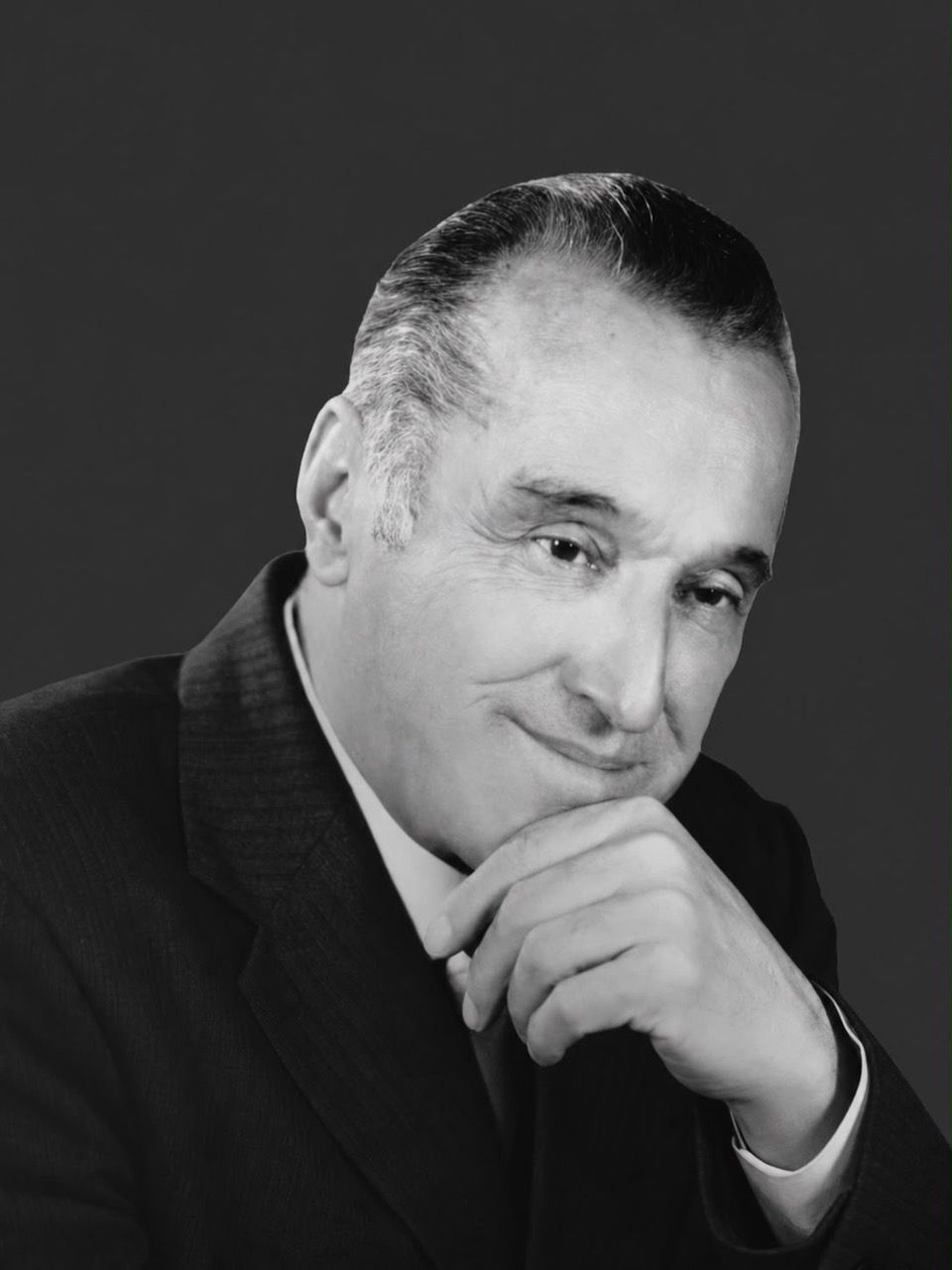
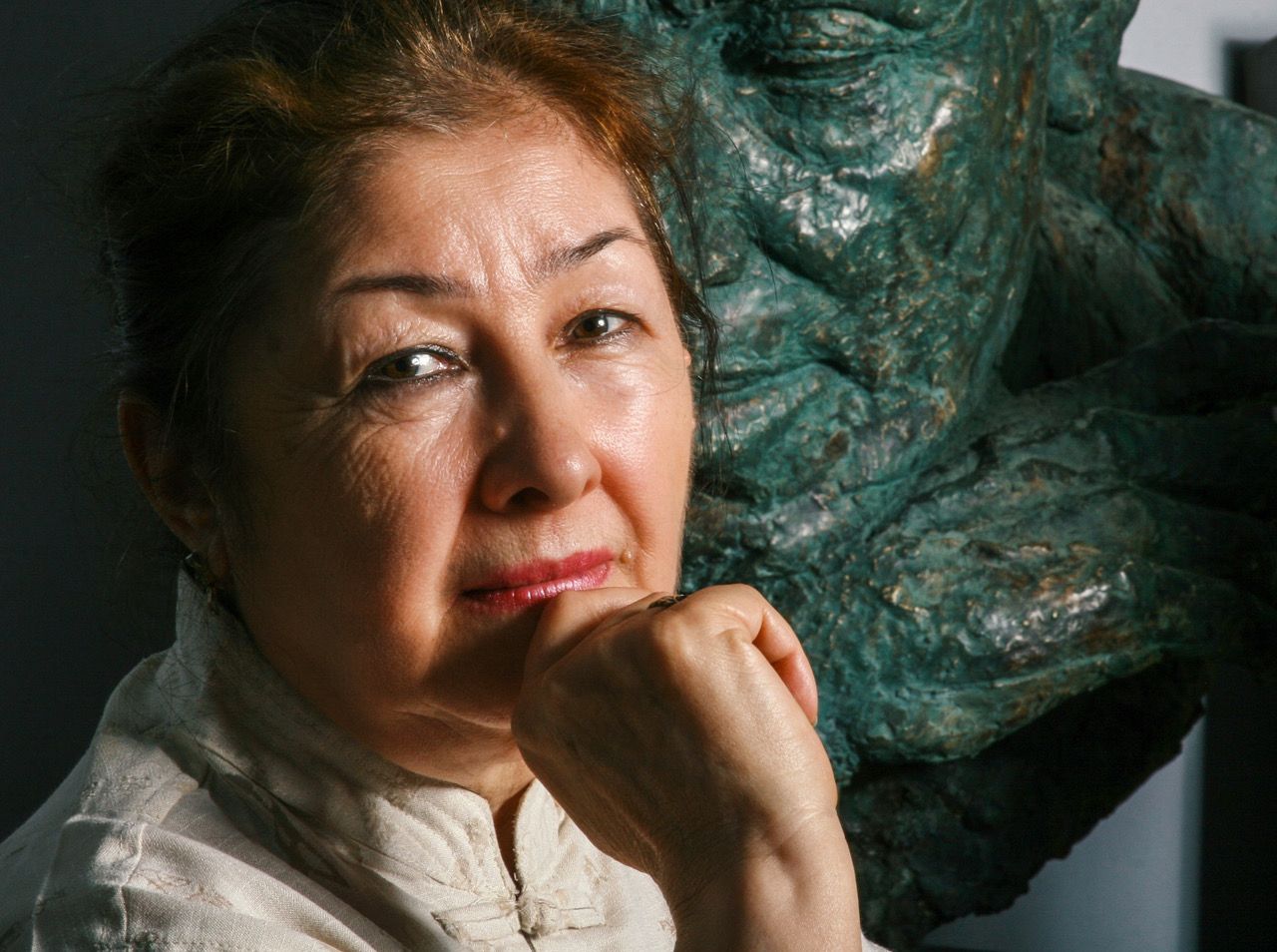
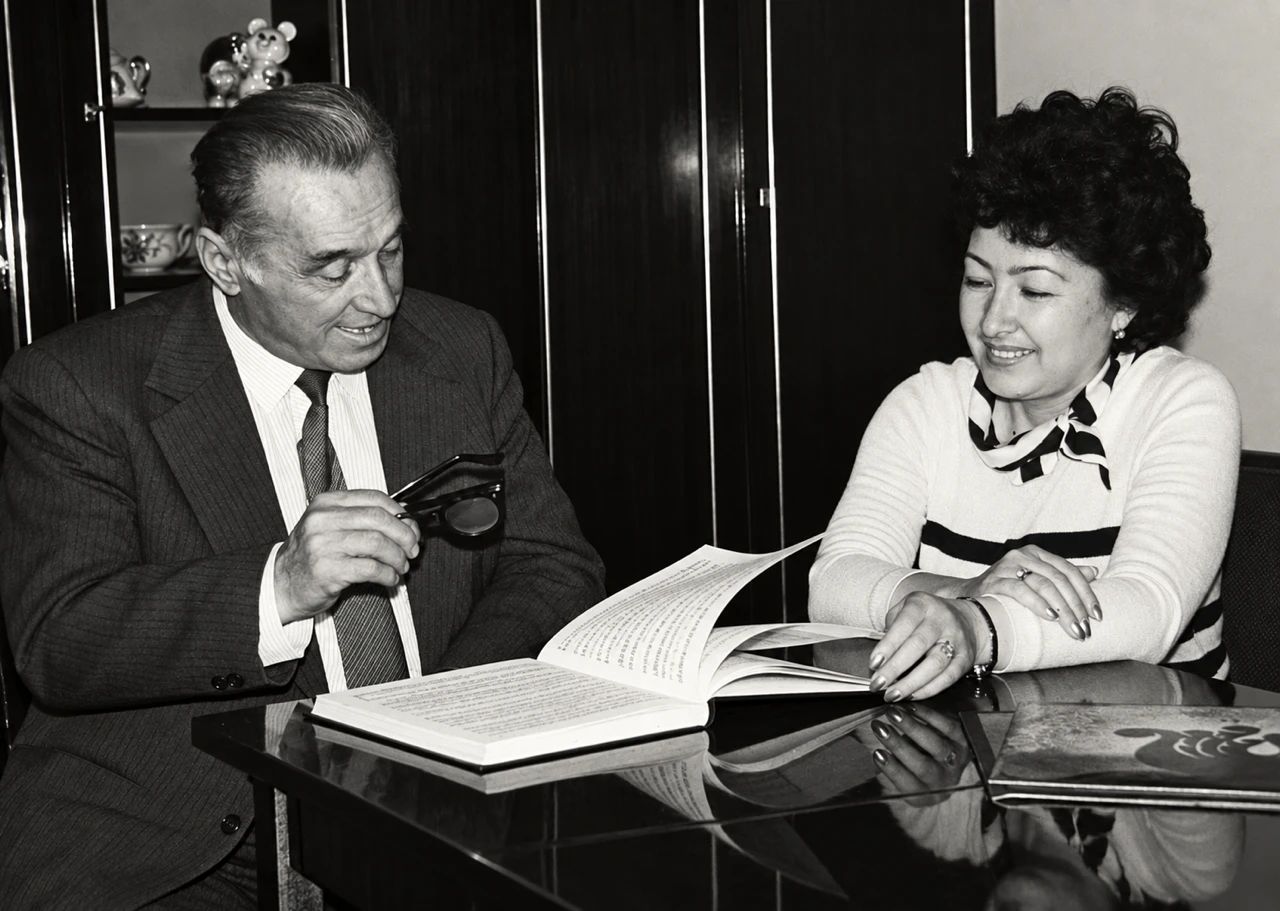
Зиёдулло Шаҳидӣشهیدی1914—1985
Peace, made audible.
The Shahidi Foundation carries forward the work of Ziyodullo Shahidi, the father of Tajik symphonic music. He set the six classical maqams inside the European symphony and heard one music where others heard two.
- Born
- Samarkand, 4 May 1914
- Died
- Dushanbe, 25 February 1985
- Foundation
- Dushanbe, February 1992
- Museum
- in his own house, from 1987
The Foundation's journal called culture "a peace-making instrument". He had been making the same argument since the 1950s, in the score.
I. Nasri Ushshoq — the monadic meditation
From a house of maqams in Samarkand
He was born in Samarkand on 4 May 1914, in what was then the Russian empire and is today Uzbekistan: a Persian-speaking city of poets, and the city his family’s music came from.
His father, Muqaddaskhon Shahidi, was a musician known in the town, and he kept a salon where the shashmaqom was played — in the reforming, Jadid-influenced intelligentsia of the city, which is the fact that later killed him. The classical poets were read aloud in that house: Firdausi, Rudaki, Hafiz, Jami. It is where the ear was trained. Ziyodullo learned the nay, the tanbur and the dutar by playing them, long before he could read a Western score.
In 1937 his father was killed. We have always put it in one sentence:
He overcame two crucial events in the culture of the region: the replacement of Arabic-based Farsi and Turkish by Cyrillic, and the persecution of intellectuals — his father, Muqaddaskhon Shahidi, was murdered during the Bolshevistic terror of 1937.
Accounts of how he died differ. One Russian source says he was arrested by the NKVD and died in prison six months later; a Tajik interviewer, putting a question to Munira Shahidi in 2013, spoke of a grandfather who had been repressed and shot. The year is not in dispute, and neither is the fact. We do not know the manner, and say so.
The other loss in that sentence is the alphabet. He was born into a language written in the Perso-Arabic script and did his adult work in a language written in Cyrillic. In one generation a thousand years of poetry became unreadable to the people who had inherited it. Much of what he wrote afterwards was a way of getting it back.
II. Bebokcha — expectation, before the Fiesta of Meeting
He entered the Conservatory at thirty-two
By 1939 he was in Dushanbe, running the song-and-dance ensemble of the Tajik State Philharmonic — a post he held for thirteen years. He was known as a gidjak player and a writer of melodies. He had no formal training in composition until he was nearly thirty.
After The Second World War, in 1946, a group of Tajik melodists entered Moscow Conservatory, but only one of them managed to graduate from that School of Music.
He was thirty-two when he enrolled and forty-three when he finished, in the composition class of Vladimir Fere. Moscow in those years meant Shostakovich, Khachaturian, Khrennikov, Kara-Karaev — what we called, in our own text, “the complicated interconnections between the Russian, Caucasian and Central Asian traditions”.
The songs he wrote in that decade travelled further than the concert pieces:
This feature of his art was an integral part of the radio music of that period, linking Tajiks, Uzbeks, Iranians, and Afghans of the 50s and 60s, and bringing them out from their political isolation.
Then the part that usually gets left out. He did not begin as the maqam’s champion. At first he refused it the status of a professional art at all, shashmaqom included, and he said so publicly enough to be answered publicly: on 6 May 1957 the newspaper Tojikistoni Soveti printed a summing-up of the argument under the heading “a reply to Z. Shahidi”.
He changed his mind. Buzruk and the Symphony of Maqams came out of the change. He arrived at the tradition he is now identified with by arguing against it first and losing.
III. The Hymn of Love, overcoming darkness
He heard no contradiction between two worlds.
Buzruk (1972) is a symphonic poem on one of the six maqams. It got the attention of the leading musicians of the Soviet Union, the Foundation’s text says, “by virtue of the ‘cordial warmth’ of his interpretation”.
The Symphony of Maqams followed in 1977, and it is the piece the whole of this site is built on. Its four parts, described by the Foundation:
the first is comprised of monadic meditations (the theme of Nasri Ushshok — Narrative of the Beloved) and the interaction of Polaris spheres. The second (based on Bebokcha) consists of the feeling of expectation with respect to the coming Fiesta of Meeting, and the third is in itself a Hymn of Love (a new interpretation of the Narrative of the Beloved), which overcomes darkness and suffering of expectation. Finally, the lyric-contemplating monadic theme (new version of Bebokcha) and the various aspects of the whole returns to the starting point, but with the new quality of the wisdom of life.
The technique is worth stating flatly, because it is usually described as a mood. The Music Encyclopedia records that the orchestral colour of the Symphony of Maqams rests on sonoristic effects, written-out aleatory and ostinato complexes — the newest compositional styles of the day — while the ancient Tajik monody keeps its strict purity underneath. A single unharmonised line, and around it a 1970s avant-garde apparatus, neither one giving way. In 1983 the symphony was played at the Sixth Congress of the USSR Union of Composers and at the international symposium of maqam scholars in Samarkand.
The opera came earlier. Komde and Madan (premiered 1960, full score published 1982) is the first Tajik national opera, after the poem by the seventeenth-century poet Bedil, recorded for Moscow radio under Gennady Rozhdestvensky. Its leitmotif is Ushshoqi Samarkand — Beloved of Samarkand. The Foundation notes what makes it not a European opera: “the characters are not so distinct. The theme of Madan sometimes appears in Komde’s features as she accompanies Madan’s arias.”
In the wisdom of maqam tradition and symphonic thought, Ziyodullo Shahidi saw not the contradictions of musical traditions, but the harmony of being and the eternity of Love.
IV. The theme returns, with the wisdom of life
The house where the music still lives.
He died in Dushanbe on 25 February 1985 and is buried at Sari Osiyo. He had left instructions that his house become a museum of his work. In 1987 his daughter Munira and his widow Marhabo made it one, and in 1989 it became the Republican Museum of Musical Culture — the first museum of music in Tajikistan. It holds his manuscripts and scores, his gramophone records, his own instruments and those of other masters of the maqam.
The Foundation came five years later, in February 1992, in the first months of the civil war. Its own account of the moment is unsentimental:
At that time, Tajik society had split into two contradictory ideological fronts which threatened to annihilate the values created by the previous generation, and there was a distinct need for a foundation of this kind.
It was set up by the museum together with the Ministry of Culture, the Ministry of Education, the Academy of Sciences, the National University and the Kayra-Kum carpet factory. From 2001 it published Fonus, a journal in Tajik, Russian and English “devoted to culture as a peace-making instrument”, through UNTOP, UNDP, UNESCO, OSCE and Swiss funding. In 2004 it ran the first Ziyodullo Shahidi International Festival of Contemporary Music. Munira Shahidi led all of it until her death on 15 July 2026.
What survives is a collection, a set of recordings, a paper archive and a house. Come and listen.