
In memoriam
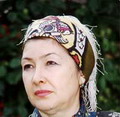
Munira Shahidi
Мунира ШаҳидӣМунира Зиядуллаевна Шахиди
Literary scholar and art historian; founder of the museum and of the Foundation
The record
- Born
- Died
- Relation
- daughter
- Museum founded
— sources disagree; show all 4 claims
1987, 1989 and 1996 are all in print. They may be describing three different events — a house-museum, a renaming, a re-registration — but no source recovered says so, so the record keeps all three rather than inventing the reconciliation.
Музыка Зиёдулло Шахиди на Великом шёлковом пути read
Her own account: «Системная работа началась с создания в Душанбе музея музыкальной культуры имени Шахиди в 1987 году».
Шахиди, Мунира Зиядуллаевна extracted
Russian Wikipedia: took part in creating the museum in 1987.
Республиканский музей музыкальной культуры имени Зиёдулло Шахиди — каталог extracted
The museum catalogue listing gives 1989. Whether that is a second founding, a renaming or a re-registration is not stated there, and is not decided here.
Зиёдулло Шаҳидӣ extracted
Tajik Wikipedia dates both the museum and the Foundation from 1996, and flags its own doubt.
- Foundation founded
- Fonus
- Founder and chief editor of the journal Fonus
Her doctoral work was a critical study of British orientalism, in particular E. G. Browne's four-volume 'A Literary History of Persia'; her comparative study 'Ibn Sina and Dante' appeared in Dushanbe in 1986. Some circulating biographies attach further honours to her name that no source recovered here supports; those are left out rather than repeated.
She died in Moscow on 15 July 2026, at her daughter’s home, aged eighty-three. Her body was flown to Dushanbe, and the farewell was held the next day at her father’s house-museum — the museum she had made.
As far as anyone has been able to establish, no obituary for her has been published in English. This is the first.
What she did
She was born in Dushanbe, then Stalinobod, on 22 March 1943, into the family of the composer. The poet Abulkasim Lohuti, a close friend of her father, is said to have given her her name.
She read English at the Tajik State University and graduated in 1964, then went to the Institute of Oriental Studies in Moscow. Her thesis was a critical study of British orientalism — in particular E. G. Browne’s four-volume A Literary History of Persia — which was an unusual subject for a Soviet postgraduate to choose, and it left her, in the Foundation’s words, “aware of the very complicated literary relationship between two different worlds: Persia and England”.
Ibn Sina and Dante came out in Dushanbe in 1986: a comparison of the humanist poetics of the Persian and European traditions. The academician Numon Negmatov called it a classic study of Tajik-Persian culture. She followed it with a two-volume edition of the ghazals of Rumi in the early 1990s, translations from English into Russian, and around seventy articles published in Dushanbe, Tashkent, Moscow, Pakistan, Sweden, Japan and France.
In 1987, with her mother Marhabo, she turned her father’s house into a museum, as he had asked in his will. In February 1992, in the first year of the civil war, she founded the Shahidi Foundation. From 2001 to 2017 she edited Fonus. She was a member of the Public Council under the President of Tajikistan from 1996, a fellow of the Swedish Institute and of the Maison des Sciences de l’Homme in Paris, an associate member of Cambridge University, and from 2017 a professor at the Tajik National University.
From 2017 to 2022 she was the national team leader for Tajikistan in GCRF-COMPASS, a £2.93m research programme led by the University of Kent and funded by UK Research and Innovation. In January 2019 she spoke at the European Parliament.
Her last book, Cultural Ties Between East and West in the 21st Century, was published in Oslo at the end of 2024 in Tajik and English, printed at the expense of two Iranian visitors to her father’s museum. It was presented in Baku, Cambridge, Berlin, Prague, London and Samarkand. Ten copies reached Tajikistan, bought by the Tajik embassy in Uzbekistan. There was no presentation at home.
In her own words
My book was presented in Cambridge and Berlin, but not in Tajikistan! — September 2025
The rest of what follows comes from one document. On 2 July 2026 she gave an interview to zarnews.uz in Samarkand, after a presentation of books about the family at the house-museum of Sadriddin Ayni. It was her last published interview. She died thirteen days later.
She was asked what her father’s music had to do with the Silk Road, and what she had been doing about it for thirty years. On the beginning of that work:
In 1996, as a fellow of Gothenburg University, I took part in a London conference of music museums and archives. Preparing my paper, I could not find in the British Library any substantial survey of the musical culture of Central Asia over the last century. That sense of a “void” in the modern system of knowledge became the starting point of my address at the Victoria and Albert Museum. Ziyodullo Shahidi’s songs, in English translation, helped the audience feel the common ground of the ideas of kindness and love of one’s fellow man.
On what her father had been doing:
From the beginning of the 1950s Shahidi looked for ways of realising the maqam tradition in polyphonic symphonic music. That idea stayed the guiding star of his work. In the union of the maqam and symphonic traditions he saw not a rivalry of cultures but their harmony.
And, near the end of the interview:
The music of the New Silk Road will serve the cause of peace. And where there is peace, the conditions arise for cultural and economic wellbeing.
The interviewer’s last question was what she would wish the paper’s readers. She congratulated Uzbekistan on thirty-five years of independence and finished:
May Uzbekistan and my native Samarkand flourish!
She was born in Dushanbe. Samarkand was her father’s city, and she called it hers.
She spent thirty years filling that void in: a museum, a foundation, a journal, a shelf of books, and a long argument conducted in four languages — that the music of Central Asia belongs in the general account of the world’s music and not in a footnote to it.